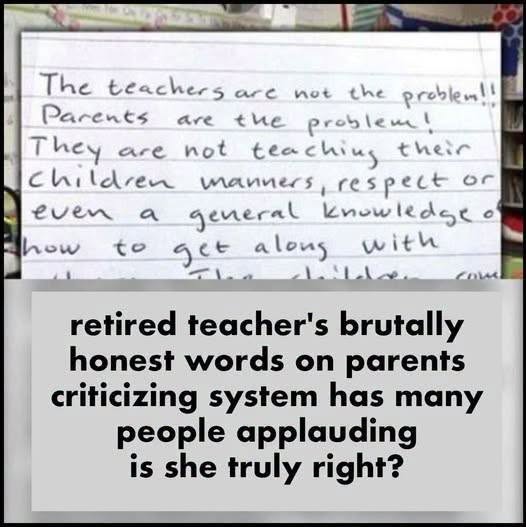
Town Hall Turbulence
The community center buzzed with the stale smell of coffee and the low hum of restless chatter as I took the podium.
“Good evening,” I began, my voice steady despite the creaking chair beneath me. “I’m Lisa Roberson, retired after thirty‑four years in the classroom.”
A murmur rose from the front row where teachers sat rigid, their shoulders stiff as if bracing for a gale.
“I wrote a letter,” I continued, pulling the folded pages from my coat pocket, “because I’ve seen too many children slip through cracks that could be mended.”
“Why bother now?” a skeptical parent shouted, arms crossed, “when the board already promises reforms?”
I felt the paper tremble in my hands, the ink catching the dim light.
“Because promises without action are empty,” I said, reading aloud. “When a child arrives without a pencil, we cannot teach mathematics; we can only teach survival.”
Mr. Chen, a local teacher, leaned forward, his brow furrowed. “You speak of resources, Lisa, but our budget is already stretched thin.”
I glanced at the board members, their faces a mask of polite concern.
“The budget isn’t the problem,” I replied, “the allocation is.”
My words cut through the tension, and a few heads nodded. The room seemed to contract, the air thick with anticipation.
“We need partnership,” I urged, “not just between districts, but between homes and schools. Parents must be heard, and teachers must be supported.”
Someone in the back whispered, “She’s retired. What does she know now?”
I let the silence settle, then closed the letter with a firm hand.
“I will stand with any family that feels abandoned by this system.” The words hung, echoing off the plaster walls.
Applause erupted, tentative at first, then swelling as the crowd sensed a shared urgency.
Meeting Maya Patel
As the lights dimmed and people filtered out, a young woman lingered near the exit, her hands twisting a frayed tote bag.
“Excuse me, Ms. Roberson?” she asked, voice trembling like a loose thread.
“Yes?” I turned, the weight of the evening still humming in my chest.
“I’m Maya Patel,” she said, eyes darting to the hallway. “My son, Alex… he’s being expelled because he can’t afford the supplies the school demands.”
My heart tightened. “Expelled? For missing pencils?” I asked, the question barely a whisper.
She swallowed, eyes glistening. “They say it’s a policy—no supplies, no seat. And now they’re threatening to send him to a private academy we can’t afford.”
“That’s absurd,” I said, feeling the surge of old teacher fury. “We can’t let a child be punished for poverty.”
She nodded, tears threatening to spill. “I tried to talk to Mr. Chen, but he said the board won’t bend. I’m terrified.”
I placed a hand on her arm, steadying her. “Maya, I’ve seen this before. We’ll navigate the paperwork together, appeal the decision, and find a way to get Alex the supplies he needs.”
She clenched her fist, voice cracking. “You really think we can fight this?”
“We have to,” I replied, the resolve in my tone matching the fire in my eyes.
She took a shaky breath, then let out a sob that seemed to shake the hallway.
“If Alex can’t stay in school,” Maya cried, “we’ll lose everything. The landlord says if we don’t find a new place for the kids to attend, we’ll be evicted. Our home—our safety—depends on this.”
The words hit like a slammed door, the weight of looming homelessness crushing the room.
