Low Hum in the Dark
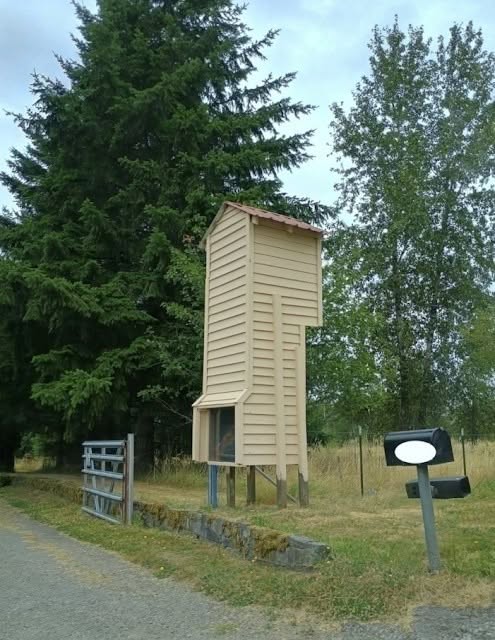
When the streetlights guttered, the world went mute except for a soft, resonant hum that seemed to rise from the broken glass of the tower.
Maya squeezed my arm, eyes wide, as the sound vibrated through the cold night air.
“It’s coming from… there,” she whispered, pointing to the jagged shards that still clung to the concrete base.
I stepped closer, each footfall crunching on crushed gravel, the hum growing steadier, like a low‑pitched heart beat.
Behind the shattered panes, a thin line of darkness revealed a seam in the stone—an understated hatch, half hidden by a stray vine.
“Do you think… it’s a door?” Maya’s breath formed tiny clouds.
I knelt, feeling the metal lip with my fingers; it was warm, as if someone had just stepped out of it.
With a hesitant push, the hatch swung open, releasing a rush of stale, cool air scented with damp earth and old paint.
A narrow staircase spiraled down, the walls lined with rough, unfinished concrete that seemed to close in around us.
Each step echoed the humming, now unmistakably emanating from beneath the ground.
At the bottom, a cramped chamber opened to reveal rows of wooden frames, their glass surfaces fogged with time.
My flashlight flickered over the photographs.
First, a black‑and‑white portrait of a man in a crisp lab coat, his name tag reading “E. H. Whitaker.”
Next, a faded family portrait: a young couple holding a baby, the baby’s face turned away, but the backdrop unmistakably the same hill where the tower stood.
Behind them, a sepia‑tinted picture of a house that matched the one we now owned, but with a different address plaque—one that read “Whitaker Farm, 1943.”
My throat tightened as I recognized the baby’s eyes—Maya’s grandmother’s, my mother’s, even my own as a child.
Each photo was dated decades before either of us were born, yet the faces were ours, as if captured from a memory not yet lived.
Maya’s hand trembled as she traced the edge of a photo showing a younger version of me, holding a toy train, standing beside the very tower in its pristine form.
The humming deepened, resonating through the floorboards, as if the walls themselves remembered.
We stood in silence, the weight of generations pressing down, the tower’s purpose finally whispering its secret.
Sunrise Revelation
We emerged just as the first light spilled over the horizon, painting the sky in bruised purples and soft golds.
The tower stood rebuilt, its glass panel whole once more, catching the sunrise and scattering it into a thousand sparkling shards.
At its base, a modest bronze plaque caught my eye:
“For those who remember.”
Maya read it aloud, her voice trembling, “For those who remember.”
Behind the coffee shop, a local news van parked, a reporter stepping out with a microphone.
He began, “Earlier tonight, a mysterious tower on the outskirts of Portland was found shattered, only to reappear this morning seemingly untouched…”
He held up a newspaper, the headline bold: “Secret Memory Facility Uncovered – Whitaker Legacy Revealed.”
My eyes darted to the article’s photo: the same tower, a group of men in lab coats beside it, one of whom bore a striking resemblance to the portrait in the underground room.
The story explained that during the 1940s, the Whitaker family owned the land and operated a covert research lab studying collective memory.
“E. H. Whitaker, a pioneering neuroscientist, designed the tower as a “memory beacon,” a device meant to archive familial recollections and replay them for descendants,” the reporter read.
It went on to detail how the tower stored visual imprints—photographs, sounds, even emotional resonance—within its glass core, allowing future generations to experience ancestral moments.
My heart pounded as the realization settled: the humming, the flickering light, the photographs—they were all part of a legacy I never knew I inherited.
“He built this for us,” Maya whispered, tears glistening in the early light.
I stared at the tower, now a silent sentinel, its purpose finally understood.
In that sunrise, the past and present converged, and the tower, once a haunting mystery, became a bridge to the memories of those who came before.
