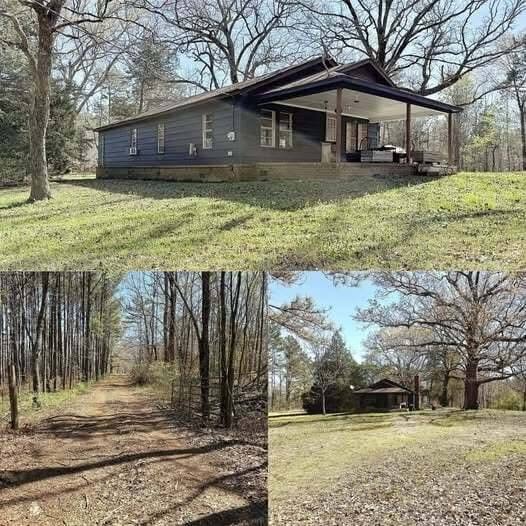
Meeting Mr. Caldwell
We stepped onto the cracked porch and found Mr. Caldwell already waiting by the rusted mailbox.
“Afternoon,” he said, his voice low and gravelly, “you’ve seen the house from the road—what do you think?”
Maya glanced at the sagging porch, then at the peeling paint, “It’s… it’s got character,” she whispered, eyes flicking to the foundation’s cracked edge.
Mr. Caldwell chuckled, “That’s one way to put it.” He pulled a faded flyer from his pocket and spread it on the kitchen table. “The price looks too good, I know. A flood hit here two months ago, water gushed into the crawl space and pushed the footings out of alignment.”
I felt the wood under my fingertips vibrate with the memory of rain. “How bad is the damage?” I asked.
He leaned in, voice dropping, “Bad enough to require a full underpinning, but the seller won’t cover it. The insurance company pulled out after the lien showed up.”
“A lien?” Maya’s brow furrowed. “What’s unpaid?”
Mr. Caldwell sighed, eyes darting to the house’s shadow. “A contractor’s lien from ’19—$12,300 that was never settled. The county’s been trying to collect, but the paperwork got lost in the flood.”
He slid a crumpled note across the table. “That’s why the price is under a car.”
“So if we pay the cash, we inherit the debt?” I asked, feeling the weight of the ledger we’d found earlier.
He nodded, “Exactly. Unless you want to negotiate with the lienholder, which would drive the price up again.”
“And the foundation?” Maya pressed.
He shrugged, “It’s sound enough for now. It’ll settle over time, but you’ll need a contractor soon.”
We exchanged a look, the scent of damp earth filling the room, and silently agreed to keep digging.
The Attic Discovery
Later, after the sun bled out behind the trees, we climbed the narrow stairs to the attic, the wood groaning under each step.
Dust swirled like tiny ghosts, catching the fading light that slipped through the cracked window.
“Look at this,” Maya whispered, her hand brushing aside a stack of moth‑eaten blankets.
Her fingers brushed a cold metal object half‑buried in the floorboards. She pulled it free—a rusted, iron key, its teeth jagged from decades of neglect.
“Do you think it opens anything?” I asked, the attic’s silence amplifying my curiosity.
She slipped the key into her pocket, then, with a sudden spark of intuition, headed toward the pantry on the main floor.
The pantry door creaked as she pushed it open, revealing rows of canned goods and a narrow panel of wood that seemed out of place.
She pressed the key into the hidden latch, and with a metallic click the panel swung inward, exposing a dark, stone doorway.
A cold wind rushed out, snuffing the candle on the nearby table, and the smell of aged earth and mildew flooded the kitchen.
We both stepped back, hearts thudding, as the hidden door creaked open wider.
Inside, the faint glow of a single bulb flickered to life, illuminating rows of vintage wine bottles, their glass glistening like amber eyes.
At the far wall, a stack of sepia‑toned photographs lay scattered—images of a grand family, formal attire, a smile frozen in time, the house’s façade immaculate, before it fell into ruin.
The captions read, “The Whitmore Estate, 1972” and “Family Gathering, 1974.”
“They vanished,” Maya breathed, voice trembling, “in the ’70s. No one knows why.”
Suddenly, the bulb sputtered, and the wall behind the wine bottles revealed a row of metal safe deposit boxes, each stamped with faded numbers.
One box shuddered, its lock failing, and burst open, spilling a cascade of old, blood‑stained bills onto the cold stone floor, fluttering like wounded birds.
